Andrew Loomis PDF Resources: A Comprehensive Guide
Andrew Loomis’s influential art instruction books are now widely accessible as PDFs, primarily through the Internet Archive. These digital copies
offer aspiring artists a cost-effective way to study classic techniques. The availability spans titles like “Drawing the Head and Hands” and “Figure Drawing for All It’s Worth”, fostering a resurgence in traditional art education.
Historical Context of Andrew Loomis
Andrew Loomis (1891-1959) was a prominent illustrator and instructor at the Art Students League of New York. His career flourished during the Golden Age of Illustration, a period marked by high demand for skilled artists creating images for magazines, books, and advertising. Loomis’s teaching philosophy, rooted in fundamental principles and a structured approach, became highly sought after.
He authored a series of instructional books, beginning in the 1930s, designed to guide aspiring artists through the complexities of drawing and painting. These books, initially published by Prentice-Hall, were revolutionary for their time, offering a clear, step-by-step methodology. However, copyright restrictions limited their availability for decades.
The advent of the internet and, crucially, the Internet Archive, dramatically changed this. Digitization efforts have made Loomis’s work accessible to a global audience, preserving his legacy and allowing a new generation to benefit from his expertise. The current widespread availability of PDF versions of his books represents a significant chapter in the history of art education.
Loomis’s Influence on Modern Art Education
Andrew Loomis’s impact on art education extends far beyond his lifetime, particularly with the proliferation of his books in PDF format. His emphasis on foundational skills – construction, anatomy, and perspective – provides a robust base for artists of all levels. Unlike some contemporary approaches, Loomis prioritized understanding how things are built, not just replicating appearances.
The accessibility of his PDFs through platforms like the Internet Archive has fueled a resurgence of interest in classical techniques. Many digital artists now utilize Loomis’s methods as a starting point, adapting his principles to suit modern tools and workflows. His “block-in” method, for example, remains a popular technique for establishing form and proportion.
Furthermore, Loomis’s books have fostered online communities where artists share their work, critique each other, and collectively study his teachings. This collaborative learning environment amplifies his influence, demonstrating the enduring relevance of his approach in contemporary art education.
Availability of Loomis’s Books on Archive.org
Archive.org serves as the primary hub for accessing Andrew Loomis’s books in PDF and other digital formats. A comprehensive search reveals nearly all of his titles are freely available for download, borrowing, or online viewing. Titles like “Drawing the Head and Hands” and “Figure Drawing for All It’s Worth” boast substantial view counts, indicating widespread usage.
Users can choose from multiple file formats, including PDF, EPUB, and DAISY, catering to diverse reading preferences and accessibility needs. While most books are entirely free, some may suggest a donation. The platform’s interface allows for easy navigation and discovery of related materials.
It’s important to note that Archive.org is a non-profit digital library committed to universal access to knowledge. The availability of Loomis’s work there is a testament to this mission, providing invaluable resources to artists worldwide.

Key Books Available in PDF Format
Andrew Loomis’s core instructional texts, including “Drawing the Head and Hands”, “Figure Drawing”, and “Fun With a Pencil”, are readily available as downloadable PDF files.
Drawing the Head and Hands (1956)
Andrew Loomis’s “Drawing the Head and Hands” (1956) remains a cornerstone of artistic instruction, now easily accessible in PDF format via the Internet Archive. This comprehensive guide meticulously breaks down the complexities of human anatomy, focusing on simplified construction methods.
The book emphasizes understanding underlying structures before detailing surface features, a technique vital for achieving realistic and expressive portraits. It covers proportional relationships, skull structure, and muscle groups influencing facial expressions.
Furthermore, Loomis provides detailed instruction on drawing hands in various poses, addressing common challenges artists face. The PDF version boasts 599,567 views and 1,784 favorites as of today, demonstrating its enduring popularity. Available formats include PDF, EPUB, and DAISY, catering to diverse user needs. It’s a foundational resource for both beginners and experienced artists seeking to refine their figure drawing skills.
Figure Drawing for All It’s Worth
Andrew Loomis’s “Figure Drawing for All It’s Worth” is a highly sought-after resource, readily available as a PDF through the Internet Archive. This book delves into the intricacies of depicting the human figure with clarity and dynamism. Loomis champions a method of constructing the figure using simplified forms, emphasizing gesture and movement before adding detail.
The PDF version provides a wealth of illustrations and step-by-step demonstrations, guiding artists through various poses and perspectives. It covers topics like proportion, anatomy, and drapery, equipping students with the tools to create believable and engaging figures.

The book’s enduring appeal is reflected in its accessibility; it’s downloadable in PDF, EPUB, and even DAISY formats; It’s a crucial text for anyone serious about mastering figure drawing, offering a solid foundation for further artistic exploration and development.
Fun With a Pencil
Andrew Loomis’s “Fun With a Pencil” is an excellent starting point for aspiring artists, and thankfully, a PDF copy is easily accessible via the Internet Archive. This book distinguishes itself by focusing on foundational drawing skills using simple tools – primarily, a pencil! Loomis encourages experimentation and playful exploration, making learning enjoyable and approachable.
The PDF version contains numerous exercises designed to develop observation skills, hand-eye coordination, and a sense of form. It covers topics like line quality, shading, and perspective, all presented in a clear and concise manner. It’s a fantastic resource for beginners, building confidence and establishing core techniques.
Available for free download, this PDF allows artists of all levels to benefit from Loomis’s insightful instruction. It’s a testament to his belief that anyone can learn to draw with practice and a positive attitude.

Specific Content Within Loomis’s Books
Loomis’s PDF books delve into detailed instruction, covering head construction, facial features, hand anatomy, and simplified figure drawing techniques for artists.
Head Construction Techniques
Andrew Loomis’s approach to drawing the head, detailed within his PDF guides like “Drawing the Head and Hands,” centers around a methodical, structural breakdown. He advocates beginning with the “sphere method,” establishing the cranium as a simplified sphere before adding planes to define the brow, cheeks, and jaw.
This technique emphasizes understanding the underlying bone structure, allowing for accurate proportions and realistic forms. Loomis stresses the importance of visualizing the head in three dimensions, utilizing planes to capture light and shadow effectively. He provides clear diagrams illustrating how to build the head step-by-step, starting with basic shapes and gradually refining them into a recognizable portrait.
The PDF format allows for close examination of these diagrams, enabling artists to meticulously follow his instructions. He also details how to accurately place facial features relative to these foundational planes, ensuring harmonious and believable results. This systematic approach, readily available in his PDF resources, remains a cornerstone of classical drawing instruction.
Understanding Facial Features
Andrew Loomis’s PDF books dedicate significant attention to dissecting and accurately rendering facial features. He doesn’t advocate simply copying what one sees, but understanding the anatomy beneath the skin. Within “Drawing the Head and Hands,” Loomis breaks down the eye, nose, mouth, and ears into fundamental shapes and planes.
He emphasizes the importance of understanding how these features relate to the underlying skull structure, influencing their form and placement. Loomis provides detailed illustrations demonstrating how to construct the eye socket, the nasal cartilage, and the musculature around the mouth.
His PDF guides highlight the subtle variations in these features across different individuals, encouraging observation and personalized application of his techniques. He stresses the importance of light and shadow in defining form, showing how to use tonal values to create depth and realism. Accessing these lessons through PDF format allows for focused study and repeated practice.
Hand Anatomy and Drawing
Andrew Loomis’s PDF resources, particularly “Drawing the Head and Hands,” offer a remarkably thorough approach to mastering hand anatomy. He views the hand not as a collection of digits, but as a complex structure built upon simplified forms – essentially, a modified glove. This method, readily available in PDF format, allows artists to grasp the underlying mechanics.
Loomis breaks down the hand into planes and volumes, demonstrating how the bones and muscles influence the surface contours. He emphasizes understanding the proportions and relationships between the thumb, fingers, and palm. His PDF guides include numerous diagrams illustrating the skeletal and muscular structure, aiding in accurate representation.
He also addresses common challenges, such as foreshortening and depicting hands in various poses. The accessibility of these lessons via PDF enables focused study and repeated practice, fostering a deeper understanding of hand anatomy and improving drawing skills.
Simplified Figure Construction
Andrew Loomis’s PDF books, notably “Figure Drawing for All It’s Worth,” champion a method of figure construction rooted in simplification. He advocates beginning with basic geometric forms – blocks and cylinders – to establish the pose and proportions before adding detail. This approach, easily studied through downloadable PDF versions, removes the intimidation often associated with figure drawing.
Loomis’s technique involves building the figure from a “peg-top” structure, defining the ribcage and pelvis as foundational elements. He then connects these with a spine, creating a framework for limbs and musculature. These PDF guides provide step-by-step illustrations demonstrating how to translate complex anatomy into manageable shapes.
The emphasis isn’t on precise anatomical accuracy initially, but on capturing the gesture and overall form. Accessing these lessons as PDF files allows for convenient, self-paced learning, building confidence and a solid foundation in figure drawing.

Accessing and Downloading Loomis PDFs
Andrew Loomis’s books are readily available as PDFs on the Internet Archive, offering various file formats like PDF, EPUB, and DAISY for convenient access.
Navigating the Internet Archive
The Internet Archive serves as the primary hub for accessing Andrew Loomis’s books in PDF format. Begin by visiting archive.org and utilizing the search function. Entering “Andrew Loomis” will yield a comprehensive list of his published works. Each listing provides details such as publication year, views, favorites, and available download options.
Users can refine their search using advanced filters, specifying file types (PDF, EPUB, etc.) or publication dates. The site offers multiple download links, often including options for different compression levels (like ABBYY GZ) and accessibility formats (like DAISY for visually impaired users). Creating a free account allows users to track their downloads and contribute to the archive. Be aware that some files may require a small donation, though many are freely available. The interface is generally user-friendly, but occasional glitches may occur due to the archive’s vast size.
File Formats Available (PDF, EPUB, DAISY)
Andrew Loomis’s books on the Internet Archive are offered in several digital formats to cater to diverse user needs. The most common is PDF, preserving the original page layout and ideal for detailed study. EPUB files provide reflowable text, adapting to different screen sizes – beneficial for e-readers and tablets. For users with print disabilities, DAISY format offers enhanced accessibility features, including text-to-speech functionality.
Additionally, some listings include TXT files containing the book’s text, useful for searching and copying content. ITEM TILE downloads provide metadata and thumbnail images. While PDF is widely preferred for its fidelity, consider EPUB for portability and DAISY for accessibility. The availability of each format varies per title, so check the download options on each book’s Internet Archive page.
Potential PDF Security Considerations
While accessing Andrew Loomis’s books in PDF format through the Internet Archive is convenient, users should be aware of potential security considerations inherent to the PDF format itself. PDF files can, in some instances, contain embedded elements that could compromise user privacy or system security. It’s crucial to maintain an updated PDF viewer with robust security features.
These features help mitigate risks associated with malicious code or data harvesting. Exercise caution when opening PDFs from unfamiliar sources, and avoid enabling automatic content downloading. Consider using a dedicated PDF reader rather than a web browser for enhanced security; This isn’t a specific issue with the Loomis books, but a general precaution when handling PDF documents online. Regularly scanning downloaded files with antivirus software is also recommended.
Loomis’s Approach to Learning
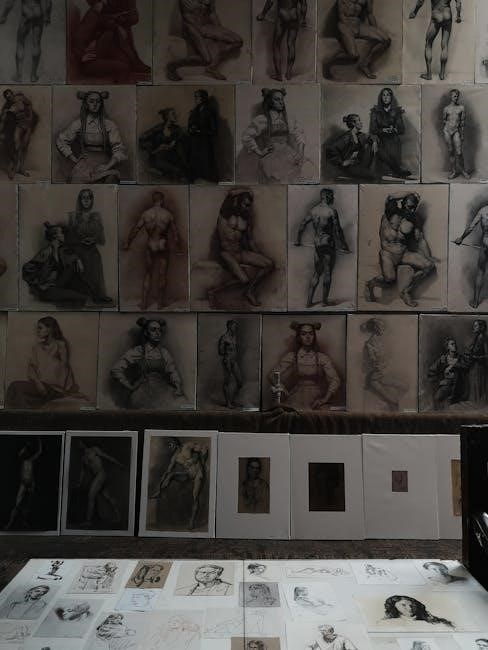
Andrew Loomis emphasized fundamental principles, like the “block-in method,” and stressed consistent practice. His books advocate diligent repetition to master drawing skills effectively.
Emphasis on Fundamental Principles
Andrew Loomis’s teaching philosophy centers on a robust understanding of core artistic principles, rather than relying on tricks or shortcuts. He believed that mastering these fundamentals – proportion, perspective, anatomy, and light & shadow – was crucial for any aspiring artist. His books consistently return to these concepts, building upon them progressively.
Loomis didn’t advocate for simply copying what you see; instead, he encouraged students to understand the underlying structure of forms. This approach is evident in his detailed explanations of head and figure construction, where he breaks down complex shapes into simpler, manageable components. He prioritized a logical, analytical approach to drawing, empowering students to create accurate and believable representations.
This emphasis on foundational knowledge remains relevant today, providing a solid base for artists exploring various styles and mediums. His methods aren’t about achieving a specific “Loomis style,” but about developing a strong artistic foundation applicable to any creative pursuit.
The Block-In Method
Andrew Loomis championed the “block-in” method as a cornerstone of his drawing approach. This technique involves initially constructing the figure or subject using simplified geometric forms – blocks, cylinders, and spheres – to establish overall proportions and pose. It’s a method of building from general shapes to specific details, ensuring structural accuracy before refining the form;
Rather than starting with outlines, Loomis advocated for defining volumes in space. This process helps artists visualize the three-dimensionality of the subject and understand how light interacts with its surfaces. The block-in serves as a foundational framework, allowing for confident adjustments and preventing anatomical errors later in the drawing process.
His PDF resources demonstrate this method extensively, with clear illustrations showing how to break down complex forms into these basic building blocks. Mastering the block-in is key to unlocking Loomis’s approach to figure and head construction, providing a solid foundation for realistic representation.
Importance of Practice and Repetition
Andrew Loomis’s books, readily available as PDFs, consistently emphasize the critical role of dedicated practice and relentless repetition in developing artistic skill. He didn’t present his methods as magical shortcuts, but rather as tools that yield results only through consistent application and diligent study. Loomis believed that understanding the principles was only the first step; true mastery demanded countless hours of drawing.
His approach isn’t about innate talent, but about building visual literacy through focused exercises. The PDF format allows students to repeatedly access and work through his lessons, reinforcing concepts and solidifying muscle memory. He encouraged students to fill sketchbooks with variations on his techniques, pushing beyond simple copying to internalize the underlying structures.
Loomis’s philosophy, clearly articulated in his downloadable resources, is that consistent, deliberate practice is the most reliable path to artistic improvement, regardless of natural aptitude.

Legal Considerations Regarding Loomis PDFs
Andrew Loomis’s books are in the public domain, allowing free download and distribution of PDF versions. This legal status ensures open access for artists globally.
Public Domain Status
Andrew Loomis’s works, including all his celebrated drawing instruction manuals, have entered the public domain in the United States and many other countries. This crucial legal standing stems from the expiration of copyright terms, generally 95 years after the original publication date for works published before 1978. Consequently, anyone can legally download, share, reproduce, and even modify these PDFs without seeking permission or paying royalties.
The Internet Archive leverages this public domain status to offer a vast collection of Loomis’s books in various digital formats, notably PDF, EPUB, and DAISY. This accessibility is a boon for art students and enthusiasts worldwide, removing financial barriers to learning from a master illustrator. It’s important to note that while the content is free to use, attributing Andrew Loomis as the author is still considered good practice and respects his artistic legacy.
This public domain status doesn’t imply a lack of quality control; rather, it signifies a commitment to preserving and disseminating valuable artistic knowledge for generations to come.
Free and Open Access
Andrew Loomis’s instructional books are remarkably available for free download and open access, primarily through platforms like the Internet Archive. This accessibility removes traditional financial obstacles, allowing artists of all backgrounds to study his renowned techniques without cost. The Internet Archive hosts multiple formats – PDF, EPUB, and DAISY – catering to diverse user preferences and accessibility needs.
The open nature of this access extends beyond simple downloading; users can borrow digitally, stream content, and contribute to the archive’s preservation efforts. While some resources may occasionally suggest optional donations, the core content remains freely available to all. This democratized access has fueled a significant revival of interest in Loomis’s methods within the contemporary art community.
This commitment to free and open access underscores the belief that artistic education should be inclusive and readily available, fostering creativity and skill development globally.

Using Loomis’s Books in Contemporary Practice
Loomis’s foundational principles translate seamlessly into digital art workflows, providing a strong base for artists. His techniques remain relevant, inspiring further study and adaptation.
Adapting Loomis’s Techniques for Digital Art
Andrew Loomis’s methods, originally intended for traditional media, are remarkably adaptable to digital painting and illustration. The core principles of construction – utilizing simplified forms like blocks and spheres – translate directly into 3D modeling and digital sculpting workflows. Artists can leverage Loomis’s head and figure construction techniques as a base mesh for digital sculpting, saving significant time and ensuring accurate proportions.
Furthermore, the emphasis on understanding anatomy and form remains crucial in the digital realm. Digital artists can use Loomis’s drawings as reference, tracing over them to internalize the underlying structures. The “block-in” method, a cornerstone of Loomis’s approach, can be replicated using digital brushes and layers, allowing for iterative refinement and experimentation. Even the principles of light and shadow, as demonstrated in his books, are directly applicable to digital painting software, enhancing the realism and depth of artwork. Essentially, Loomis provides a solid foundation upon which digital artistry can flourish.
Loomis as a Foundation for Further Study
Andrew Loomis’s books aren’t intended as the end of an artist’s education, but rather a robust starting point. Mastering his fundamental principles – construction, anatomy, and form – provides a strong base for exploring more advanced techniques and diverse artistic styles. Students can build upon Loomis’s teachings by delving into specialized areas like color theory, perspective, and dynamic figure drawing.
The readily available PDF versions facilitate continuous learning and practice. After internalizing Loomis’s methods, artists can confidently tackle more complex subjects and experiment with different mediums. Online communities and forums dedicated to Loomis’s work offer valuable feedback and support, fostering a collaborative learning environment. His books serve as a common language, enabling artists to discuss and critique each other’s work effectively. Ultimately, Loomis equips artists with the essential skills to pursue their individual artistic visions.
Resources for Further Learning (Online Communities)
Numerous online communities have blossomed around Andrew Loomis’s work, providing invaluable support and feedback for artists studying his methods. Platforms like Blender Artists Community host dedicated threads where users share artwork, ask questions, and discuss Loomis’s techniques. Reddit also features active subreddits focused on drawing and art fundamentals, often referencing Loomis’s books as core learning material.
These communities offer a space to critique work, receive constructive criticism, and connect with fellow learners. Many artists share their progress, demonstrating how they’ve adapted Loomis’s principles to their own styles. Furthermore, these forums often link to additional resources, tutorials, and exercises, expanding upon the knowledge found in the PDF versions of his books. Engaging with these online groups accelerates learning and fosters a sense of camaraderie among artists inspired by Loomis’s legacy.